A Rainy Afternoon with What Is Already in the Cupboard
A rainy afternoon cupboard plan turns spare paper, jars and thread into a relaxed making session, without buying supplies or starting with a shopping list.
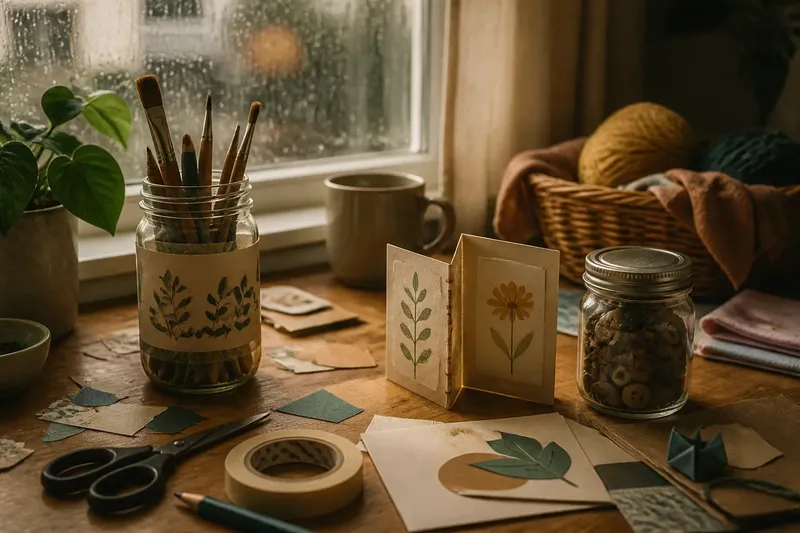
A rainy afternoon cupboard plan works best when you choose one small thing to make before you open a drawer. That choice gives the afternoon a shape, keeps the mess contained and helps you use what is already at home rather than shopping for a project.
Start with the weather at the window, the time you have and the people who will join you. Then pick an activity that suits those conditions. A paper window decoration, a simple notebook or a jar for holding loose buttons can all be made with ordinary household odds and ends.
What would make this afternoon feel satisfying?
Before looking for materials, decide what you want the making to do. Are you after a quiet activity for yourself, something children can join, or a useful object for a shelf? A small aim is easier to finish than a grand project, especially when the afternoon has no fixed end point.
Keep the choice modest and specific. “Make something out of paper” leaves you with too many possibilities; “make a folded card for someone” gives you a clear destination. The aim need not be useful in a practical sense. A decoration you enjoy looking at is enough.
Consider who is taking part and what they are comfortable handling. Younger children may enjoy tearing paper and arranging shapes, while an adult can manage any cutting that needs more care. If you are on your own, choose a task that feels restful rather than one that demands a perfect finish.
How do you choose the activity before gathering supplies?
Use the materials you can already name, not an imagined kit. Think of a few familiar cupboard and drawer contents: scrap paper, envelopes, clean jars, string, wool, fabric offcuts, cardboard packaging, pencils, tape or washable glue. Pick one activity that needs only a small handful of these.
Match the project to what is available. Flat paper lends itself to cards, paper chains or a small folded booklet. A clean jar can become a holder for pens or paintbrushes. A short length of yarn and a piece of cardboard might become a simple tassel or a wrapped handle for a storage box.
Choose a stopping point as well as a project. For example, decide that you will make one card, decorate one jar or fill one page of a notebook. This is like choosing a single shelf to tidy rather than turning the whole room upside down: the boundary makes it easier to enjoy the task and put things away.
If you cannot settle on an idea, use this quick decision:
- Want something flat and easy to store? Choose a card, bookmark or folded booklet.
- Want to use a container? Choose a pen holder, button jar or small vase cover.
- Want a relaxed activity for several people? Choose paper shapes to arrange into a shared picture.
- Want to use fabric or yarn? Choose a simple tie, wrap or decoration that does not need a complicated pattern.
What should you check before you collect anything?
Now gather only what the chosen project calls for. Check that reused containers are clean and dry, paper is suitable for the way you plan to fold or draw on it, and there is enough room to work without moving someone else’s belongings. Put the materials on a tray or cleared table so the project stays together.
Look over each item before using it. Set aside paper with private details, packaging with sharp edges, and anything damp, dirty or unpleasant to handle. If an item’s suitability depends on its label, the maker’s instructions or local rules, follow those rather than guessing.
Gather simple tools only if they are needed: a pencil, blunt scissors, a ruler, tape or glue. Keep the project within the abilities of everyone taking part, and let an adult handle tools or materials that are not suitable for a child. There is no need to fill the table with every possible craft supply.
How can you make the project without turning it into a big job?
Clear a small work area and protect it with scrap paper or an old newspaper if glue, ink or paint might mark the surface. Keep a scrap piece nearby for testing a fold or colour. That gives you a place to make small decisions without using the part you want to keep.
Make a rough version first if the design is uncertain. For a card, fold a spare piece of paper and try the layout before writing on the chosen sheet. For a decorated jar, arrange paper or fabric around it before attaching anything. The trial can be brief; its purpose is to help you decide, not to create another project.
Say you have an empty, clean jam jar, a short strip of leftover paper and a pencil. You decide to make a holder for paintbrushes, measure the paper against the jar by wrapping it loosely, and mark a simple pattern before fixing it in place with tape. The expected result is a jar that is easier to recognise on a desk, while the brushes remain easy to remove.
Let the object be simple. One colour, a repeated line or a carefully placed label can look considered without requiring extra materials. If an idea turns out to need something you do not have, change the design rather than adding an unplanned shopping trip.
What if you are making with children or other people?
Offer choices within the same project rather than asking everyone to follow an identical design. One person can choose colours, another can arrange shapes, and someone else can fold or write. Shared making is often easier when the task has room for different hands and preferences.
For a child, describe the next action in plain terms and keep the available materials limited to the ones being used. A small selection of paper scraps is less distracting than a whole drawer. Let the child make decorative decisions, while an adult takes responsibility for any task requiring a sharper tool or close attention.
If a friend or housemate joins, agree on how the finished item will be used before making it. A shared card can be signed by everyone; a jar might be placed where all can reach it. That small conversation avoids making an object that no one knows where to put.
What should you do with scraps and unfinished work?
Pause when the activity reaches its stopping point. Put away tools, return unused materials to their usual places and separate clean offcuts from anything that belongs in the rubbish or recycling. Follow local sorting guidance for packaging and other materials, since accepted items can vary.
Keep scraps only if they have a likely use. A few clean paper shapes may suit another card; a tangle of tiny pieces that cannot be used comfortably may not deserve a permanent home. Store reusable leftovers together in a small envelope or box, rather than letting them spread across several drawers.
If the project is unfinished, decide where it can rest without being damaged or mistaken for rubbish. A folded card can go in a book; a wet or freshly glued item needs a safe place to dry. Make a note of the next small action if you want to return to it, such as adding a message or attaching one last piece.
Which cupboard projects suit a rainy afternoon?
Can I make something useful from a clean jar?
Yes. A jar can hold pens, buttons or paintbrushes, and a paper label can show what belongs inside. Keep the decoration simple so the container remains easy to clean and use.
What can I make with scrap paper and envelopes?
Fold an envelope into a pocket for loose notes, make a bookmark, or create a small card from a clean sheet. Check that any writing or address details on reused paper are covered or cut away before using it.
How can I include a child without buying craft supplies?
Offer clean paper scraps, pencils and a clearly bounded task such as arranging shapes into a picture. Choose age-appropriate materials, and have an adult manage scissors or anything else that needs careful handling.
What if I cannot finish before the afternoon ends?
Stop at a natural point, gather the parts in one place and note what remains. If the project no longer feels worthwhile, keep any usable materials and let the rest go rather than treating completion as an obligation.
How do you leave the room ready for the next part of the day?
Give yourself a short reset before moving on. Put the finished object somewhere it can be seen or used, wipe the work surface if needed, and return tools and spare materials. If glue or paint needs time to dry, choose a spot away from children, pets and everyday traffic.
The point of a rainy afternoon cupboard plan is not to turn every leftover into a craft. It is to make one deliberate choice, enjoy the materials already within reach and finish with a small object or a calmer table. Next time the rain settles in, you can choose a different modest project without needing to buy a thing.