Borrow, Swap or Keep: Choosing a Second Use for Household Items
Borrow, swap or keep household items by matching each choice to its likely next use, so useful things reach the right person without adding clutter.

Borrowing, swapping or keeping a household item makes sense for different kinds of next use. If a folding table is needed for one afternoon, a neighbour may be able to lend one; if a child has outgrown a coat, swapping could put it to work again; if a screwdriver is used every month, keeping it may be simplest. The useful question is not just whether you want the item now, but what is likely to happen to it next.
That question helps avoid two common dead ends: passing on something nobody can use, and keeping an object because its possible future usefulness feels hard to rule out. Think of the item like a library book, a shared recipe tin or a favourite mug: its value depends partly on who needs it and when. The best choice follows the item’s pattern of use, condition and likely audience.
What kind of next use does the item have?
Start by describing the item plainly. Is it needed for a short task, likely to suit someone else for longer, or useful enough in your own routine to earn its storage space? A realistic answer matters more than a hopeful one.
Separate occasional need from ongoing need. A carpet cleaner might be useful for a one-off spill, while a well-used saucepan belongs in the kitchen. A box of spare tiles, by contrast, may be worth keeping briefly if it matches a repair in your home, but less useful if there is no foreseeable job for it.
Then consider condition and completeness. An item with a missing charger, loose handle or unclear parts may be difficult to lend or swap, even if it still seems valuable to you. If it is worn but functional, say so clearly; if it is broken or unsafe to use, do not pass it on as ready for another household.
When does borrowing fit better than owning?
Borrowing suits an item with a brief, specific job and a likely route back to its owner. It is particularly useful for bulky objects that would otherwise occupy a cupboard, such as a hand trolley for moving boxes, a folding table for a gathering or a specialist kitchen appliance for a recipe.
It also depends on practical access. A tool in a nearby neighbour’s shed may be more useful than one listed in a city-wide group if collecting it takes more effort than the task itself. Ask about availability, collection and return before making plans, and agree on a return time that works for both people.
Borrowing works less well when the item is needed unpredictably or repeatedly. If you often need a particular pan, charger or rain cover, arranging access each time may become a nuisance. In that case, keeping an appropriate version—or finding a shared arrangement that genuinely suits everyone—may be more sensible.
For example, imagine you need a wallpaper steamer to remove a small section of old paper in a rented flat, and a neighbour has one available. You could ask to borrow it for a mutually agreed window, check that the accessories are included, and return it clean. The expected result is a completed one-off job without storing a bulky machine you are unlikely to use regularly.
When is swapping a better route?
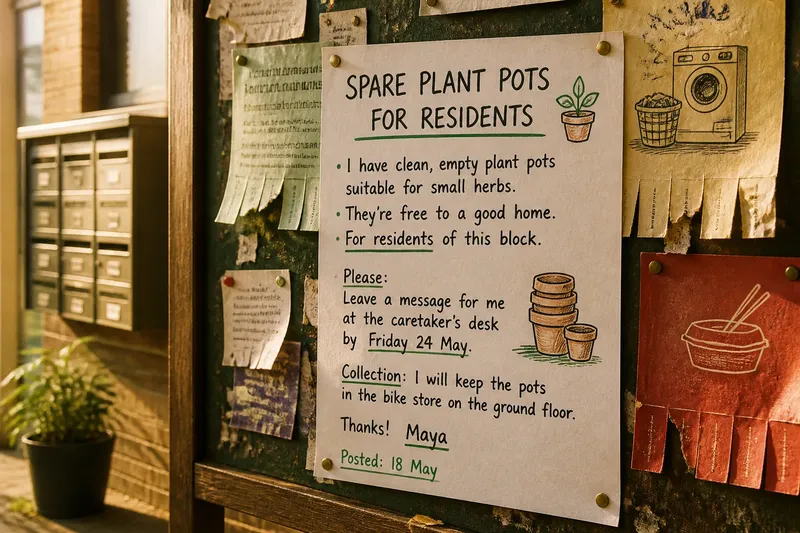
Swapping suits sound items that have finished their useful run in one home but may meet a clear need in another. Children’s clothes, books, plant pots, kitchenware and hobby supplies are often easier to pass between people when their condition and contents are easy to judge.
A swap is not simply a way to make unwanted things disappear. It works best when both sides have something they actually want, and when the exchange is fair enough for everyone involved. A clean coat in a stated size is more useful than a mystery bag of mixed garments; a complete board game is easier to assess than one with unknown pieces missing.
Local options can include a neighbourhood exchange group, a community centre event, a workplace table or a direct arrangement with someone you know. Choose a setting where people can ask about condition and arrange collection without unnecessary back-and-forth. If an item does not find a taker, that is useful information: the next step may be repair, donation through a suitable service or responsible disposal, rather than keeping it indefinitely.
Be specific in a listing or conversation. Name the item, its condition, any missing parts and the kind of use it suits. A short description helps the next person decide without having to guess, and it reduces the chance that a swap merely moves clutter from one doorway to another.
When should you keep an item?
Keep an item when you can name a realistic use that recurs, or when it is difficult to replace and has a suitable place in your home. A sturdy step stool used for high shelves, for instance, may justify its storage space even if it is not used every day. Frequency matters, but so do convenience and the cost of being without it when needed.
Keeping is less convincing when the reason is only “someone might need this someday”. Set the item beside the place where it would be used, or consider whether you would seek it out if it were not already in the cupboard. If it has sat untouched through several relevant occasions, its imagined future use may be stronger than its actual role.
There are sensible exceptions. A spare key, a matching paint tin for a current room or a set of screws saved for a specific piece of furniture may be useful because it belongs to an identifiable task. Keep such things together and label them plainly. Loose “useful bits” in an unmarked box are much harder to make use of.
Which choice fits your situation best?
Is borrowing suitable for something used only once?
Often, yes, if a reliable lender is close by and the item can be returned in the agreed condition. If access is uncertain or the task has a tight schedule, another option may be more practical.
Can I swap an item that has signs of wear?
Usually, if it remains fit for its intended use and you describe the wear honestly. Make missing parts and any limits clear before arranging the exchange.
How do I decide whether to keep a spare?
Name the task it supports, where it will live and what would happen if you did not have it. If those answers are vague, consider whether borrowing or passing it on would better match its likely use.
What if nobody wants the item?
Check whether it needs cleaning, repair or a clearer description, then choose an appropriate local reuse or recycling route. If it is unsuitable for use, do not disguise that by offering it as a working item.
How can you make the choice without overthinking it?
Use a short decision sequence, rather than asking whether the item is “too good to waste”. That phrase can turn every object into a permanent obligation. Instead, ask:
- What is its next likely use? Identify a specific task or person, not a distant possibility.
- How often will that use happen? A one-off need points towards borrowing; a recurring need may favour keeping.
- Can another person assess and use it? Check its condition, completeness and any limits.
- Is there a convenient local route? Consider collection, return, exchange arrangements and the time involved.
- What will you do if the first choice fails? Decide whether to try another recipient, repair it or use an appropriate disposal service.
Say you have a set of mismatched plant pots after moving to a smaller flat. If you still grow plants and can name a shelf where they will fit, keeping a few may make sense; if a neighbour is setting up a balcony garden, a direct swap or free handover could give the rest an immediate use. If nobody needs the cracked pots, separate those from the sound ones rather than bundling everything together.
For a borrowing arrangement, make the return plan as clear as the request. For a swap, describe the item before anyone travels to collect it. For something you keep, give it a defined place so it remains available for the job you had in mind. These small details make the choice more likely to work in ordinary city routines.
How do local rules and item labels affect the decision?
Some goods have specific handling or safety requirements, and instructions may differ by product or local service. Check the item’s label or manufacturer guidance where relevant, and follow local rules for disposal or collection; if the item raises a safety concern, ask a qualified professional rather than passing it on for use.
For everyday household objects, a useful principle is to match the route to the next person’s real need. Borrow what is temporary, swap what another household can use, and keep what has a dependable place in your own routine. That keeps the decision focused on the item’s next use, not on guilt about letting it go.
Before you make a final choice, picture the item’s next ordinary day: where it will be, who will reach for it, and what they will do with it. If you can answer those questions, you have a sound basis for deciding whether to borrow, swap or keep it.